
爱玩客(全文在线阅读)>
爱玩客China accelerates LEO satellite deployment with two launches in 12 days, but gap remains in launchpad efficiency, rocket reusability: expert_我的网站
A | 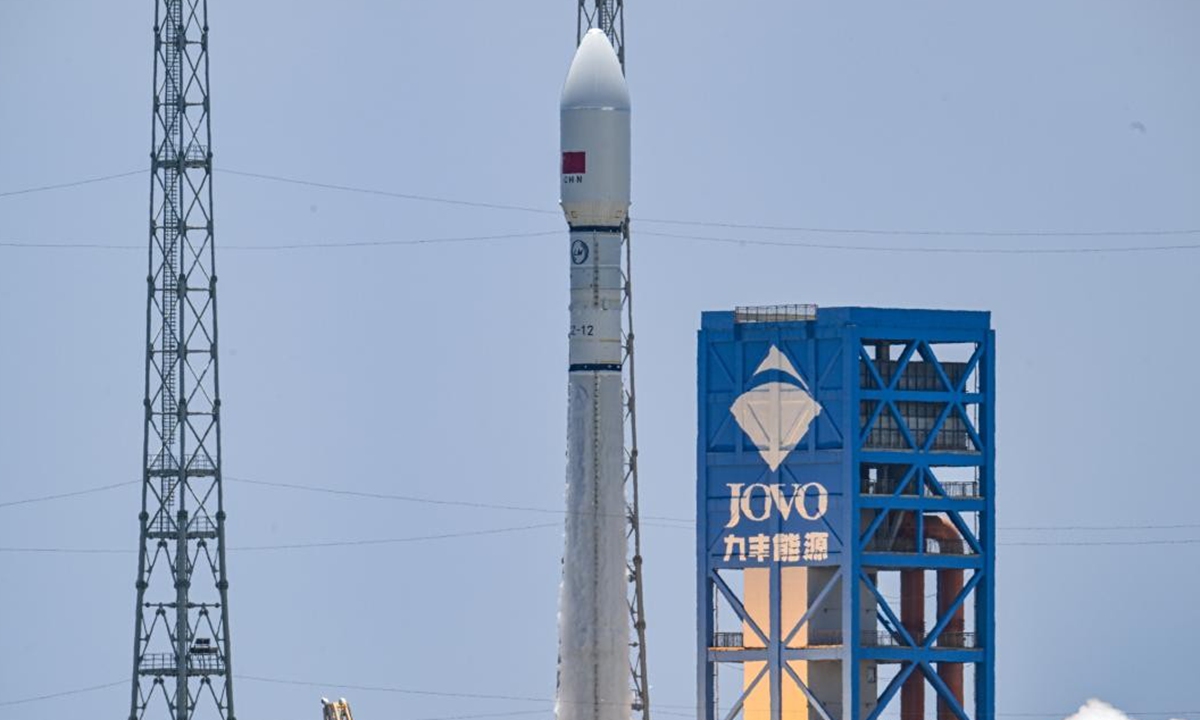 Two successful launches among China's recent frequent moves caught particular attention of space watchers - the 24th group of low-Earth orbit internet (LEO) satellites aboard a Long March-12 rocket was sent from a commercial spacecraft launch site in the southern island province of Hainan on Sunday, 12 days after the 23rd group of LEO satellites aboard a Long March-8A rocket was launched from the same Hainan site on August 4. Sunday's mission marked the 663rd launch of the Long March series of carrier rockets, which on Monday sent an SEO satellite into preset orbit, per Xinhua. Experts said the launches of two groups of LEO satellites within 12 days underlined that China is notably accelerating its pace of building its satellite internet constellation. "The launch of LEO satellites has now entered a regular and cyclical rhythm, with batches of satellites continuously being sent into orbit at relatively stable intervals," Kang Guohua, a senior member of the Chinese Society of Astronautics and a professor of Aerospace Engineering at Nanjing University of Aeronautics and Astronautics, told the Global Times on Monday. China launched the first group of LEO internet satellites on December 16, 2024, proceeding to the 24th batch in about 20 months. Kang said three major production and launch "assembly lines" are supporting the effort: satellite factories featuring centralized design in Beijing, coordinated supply chains and mass production; rockets with streamlined launch and testing procedures and multiple configurations; and launch sites capable of supporting routine constellation deployment. The Long March-12, which played a key role in the latest LEO satellite launch, is China's first 4-meter-class single-core-stage carrier rocket and was specifically developed for commercial launch needs. It is about 62.6 meters long, has a liftoff mass of 430 tons and can carry more than 12 tons to low-Earth orbit. Its first stage is equipped with four 1,250-kilonewton pump-fed liquid oxygen-kerosene engines and uses a newly developed coal-based aerospace kerosene, according to Shanghai Academy of Spaceflight Technology. The rocket adopts a "three-horizontal" launch preparation model: horizontal assembly, horizontal testing and horizontal transportation. Depending on mission requirements, it can use fairings with diameters of 4.2 or 5.2 meters and support both single-satellite and multi-satellite launches into different orbits. "This flexibility makes the Long March-12 particularly suitable for the 'one rocket, multiple satellites' model required for constellation deployment, making it one of the main launch vehicles currently used for LEO constellation missions," Kang said. The mission also highlighted the launch site's growing ability to support high-frequency launches. The rocket took only two and a half days from being transported to the launch area to liftoff, setting a record for the shortest time a rocket occupied the launch position at the site, Kang said. Despite the rapid progress, experts cautioned that the 228 satellites currently in orbit remain some distance from the ultimate goal. China's satellite internet project has a long-term goal of deploying nearly 8,000 satellites and is now in an accelerated "weaving" phase. China's advantage lies in its ability to control costs and boost production efficiency once satellite manufacturing reaches mass-production scale, another expert surnamed Liu told the Global Times. "Whether it is the production capacity of AI centers or the factory in Hainan, which has an annual satellite manufacturing capacity of 1,000 units, satellite production itself is not the problem," Liu said. "More bottlenecks lie in the operational efficiency of launch pads and the rocket payload and recovery technology." The real challenge lies in rocket reusability. Only by lowering launch costs and increasing launch frequency can China sustain a pace of more than one launch per week. This is also the strategic significance of accelerating the development of reusable rocket technology, including the Long March-10B and privately developed rockets, Kang further noted. Chinese Academy of Engineering academician Deng Zhongliang previously said in an interview that satellite internet will serve as an indispensable space-time infrastructure for 6G, enabling emerging industries worth trillions of yuan, including the low-altitude economy, advanced autonomous driving and the Internet of Things (IoT). 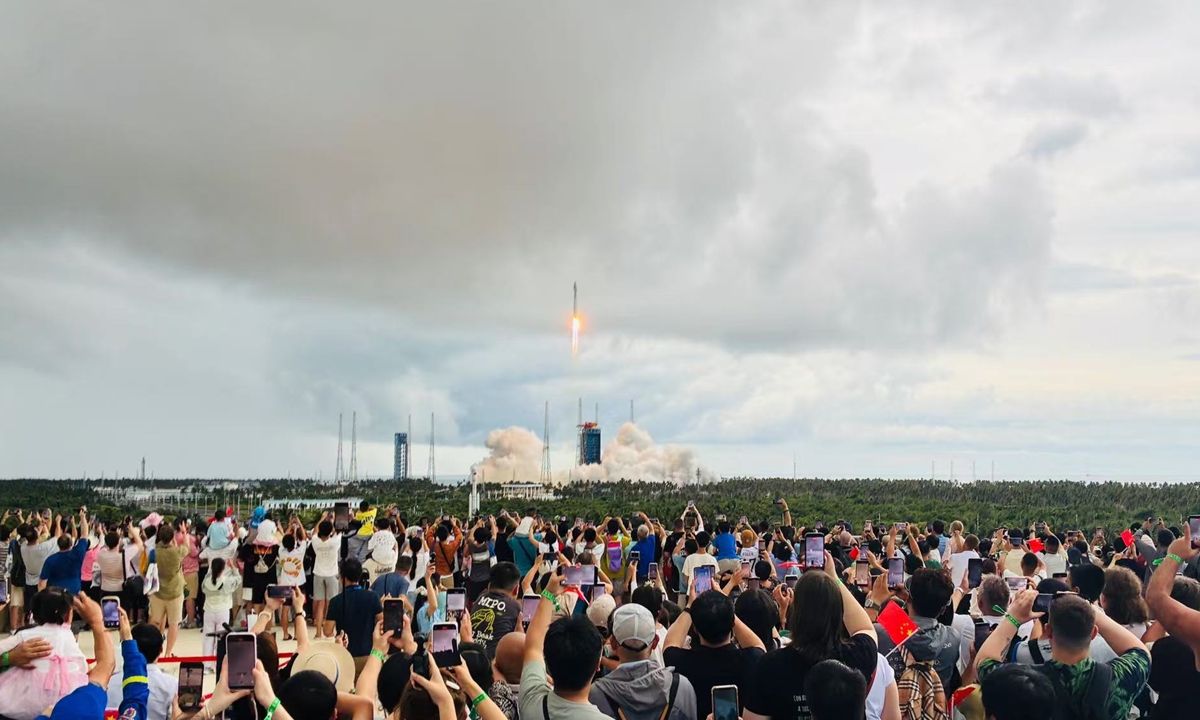 。 [ 资讯] 日前,知情人士Greg Kable称,宝马正计划重启增程动力系统(REx),首款搭载该系统的车型为即将推出的第六代X5,第六代X3及2026年推出的第二代X7也在评估适配可行性。 。第六代宝马X5谍照 第六代宝马X5谍照 此次开发由宝马与长期合作伙伴采埃孚(ZF)共同推进,旨在应对全球部分市场充电基础设施不足、消费者对纯电车型存顾虑的现状。有媒体解读认为,中国作为宝马最大单一市场,而理想汽车在增程领域的崛起,是宝马重启增程动力的重要因素之一。宝马i3 REx 宝马曾于2013年在i3 REx车型上推出增程版本(搭载两缸汽油机作为增程器),2018年该车型停产后相关技术未再应用于其他车型。此次重启,宝马将采用ZF新开发的eRE/eRE+增程架构,其中eRE+配备离合器和差速器,可同时作为发电机和辅助驱动源,配套的燃油发动机功率范围为148-201马力。系统将结合宝马第六代800V电动架构及与宁德时代合作开发的NMC圆柱电池技术,预计纯电续航超1000公里(CLTC标准),且能量管理策略针对增程模式下发动机持续充电的特性重新设计。氢动力iX5 值得关注的是,宝马氢动力车型iX5的技术架构为增程系统提供了参考——动力单元与车轮无机械连接,仅通过发电机为电池供电驱动电机。尽管宝马CEO齐普策此前认为增程系统“成本过高”,但面对市场变化,宝马正重新评估其商业价值,目前董事会已进入量产前的最终规格审核阶段。
B | (信源/AUTOCAR Greg Kable;文/ 岳长兴) Current article:http://44spjj.cengzaodengchawonin.cyou/list_98q2/34ylk0.html Published on:12:49:30 |

